
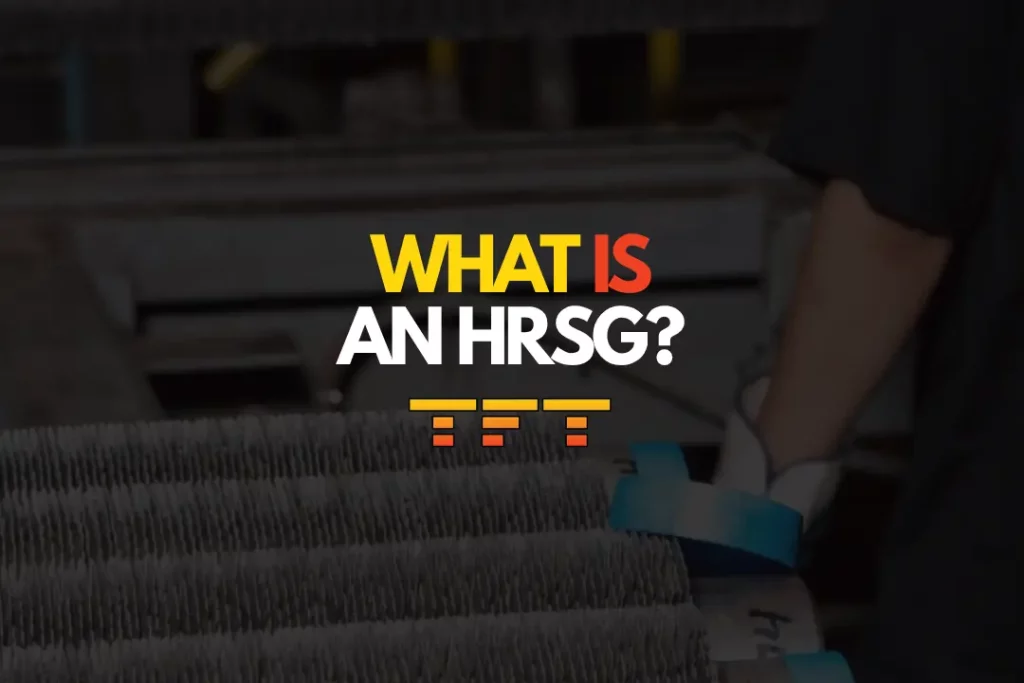
What Is an HRSG? How Finned Tubes Power Heat Recovery Steam Generators
A gas turbine sends an enormous amount of energy straight up the stack as hot exhaust. In a simple-cycle plant, that heat is lost. In a combined-cycle plant, it is captured and put back to work, and the piece of equipment that makes that possible is the HRSG. Heat recovery steam generators are one of the most important applications for finned tubes in modern power generation, and understanding how they work shows exactly why the quality of those tubes matters so much.
What Is an HRSG?
HRSG stands for heat recovery steam generator. It is a large heat exchanger that sits behind a gas turbine and captures the heat from the turbine’s exhaust gas, using that recovered energy to produce steam. That steam then drives a steam turbine to generate additional power, or feeds an industrial process that needs heat. In a combined-cycle power plant, the HRSG is the link between the gas turbine and the steam turbine, and it is the reason combined-cycle plants reach efficiencies that simple-cycle plants cannot.
The concept is straightforward: rather than letting hundreds of degrees of exhaust heat escape into the atmosphere, the HRSG puts that heat to work. The result is more power and more useful output from the same fuel, which is why HRSGs have become a cornerstone of efficient power generation.
How an HRSG Works
Hot exhaust gas leaves the gas turbine and passes through the HRSG, flowing across bundles of tubes that carry water and steam. As the exhaust moves across those tubes, it transfers its heat into the water inside, heating it, boiling it into steam, and then superheating that steam. To do this efficiently, an HRSG is typically organized into sections, each handling a stage of the process:
- Economizer. Preheats the incoming feedwater using the coolest portion of the exhaust before it reaches the boiling stage. It is the same principle behind a standalone boiler economizer.
- Evaporator. Boils the preheated water into steam, the core heat transfer duty of the unit.
- Superheater. Raises the steam above its boiling point so it is dry and energetic enough to drive a turbine efficiently.
Each of these sections relies on tube bundles to move heat from the exhaust gas into the water and steam, and each faces its own combination of temperature, pressure, and thermal demand.
Why Finned Tubes Are Central to HRSG Performance
Here is the challenge every HRSG has to overcome: exhaust gas is a relatively poor medium for transferring heat compared to a liquid. To pull a large amount of energy out of that gas, you need a very large amount of surface area on the gas side of the tubes. That is exactly what finned tubes provide. By wrapping the tube in helically wound fins, a finned tube dramatically increases the external surface area exposed to the exhaust, allowing the unit to capture far more heat than bare tubes ever could in the same space. Organizations such as Heat Transfer Research, Inc. have spent decades studying exactly this kind of extended-surface heat transfer.
Without finned tubes, an HRSG capable of the same heat recovery would be impractically large. The fins are what make it possible to fit enormous heat transfer capacity into a reasonable footprint, the same reason fin tubes and heat exchangers work so well together across so many applications. This is why finned tubes are found throughout the economizer, evaporator, and superheater sections of virtually every HRSG.
Why Tube Quality Matters in an HRSG
An HRSG is a demanding environment. The tubes endure high temperatures, constant thermal cycling as the plant ramps up and down, and exhaust that can carry corrosive compounds. In that setting, the integrity of the bond between the fin and the tube is what determines long-term performance. A mechanically attached fin relies on contact pressure that degrades with every heat-up and cool-down cycle, so contact resistance grows and heat transfer falls off over time. A high-frequency welded fin forms a true metallurgical bond to the tube, and that bond holds through years of thermal cycling. Design standards from bodies like ASME underscore how central reliable heat transfer surfaces are to this kind of equipment.
This is where manufacturing quality becomes a performance issue, not just a spec. For more than 40 years, Tulsa Fin Tube has produced high-frequency welded finned tubes for heat exchangers, boilers, economizers, HRSGs, and other demanding heat transfer applications. As the North American leader in high-frequency finning capacity, we build every tube to customer specifications in carbon steel, stainless steel, nickel alloys, duplex, and other weldable materials, with the bond integrity these applications require.
Frequently Asked Questions
What does HRSG stand for?
HRSG stands for heat recovery steam generator. It is a heat exchanger that captures heat from a gas turbine’s exhaust and uses it to produce steam, which can then generate additional electricity or supply heat to an industrial process.
What is the difference between an HRSG and a boiler?
A conventional boiler burns fuel directly to produce steam. An HRSG produces steam by capturing waste heat from a gas turbine’s exhaust rather than burning fuel of its own. In effect, an HRSG recovers energy that would otherwise be lost, which is what makes combined-cycle plants so efficient.
Why do HRSGs use finned tubes?
Exhaust gas transfers heat far less efficiently than a liquid, so an HRSG needs a very large gas-side surface area to capture that heat. Finned tubes provide that surface area by adding fins to the outside of the tube, allowing the unit to recover far more heat in a much smaller footprint than bare tubes would allow.
What sections make up an HRSG?
An HRSG is typically divided into an economizer that preheats feedwater, an evaporator that boils the water into steam, and a superheater that raises the steam above its boiling point. Each section uses tube bundles, commonly finned, to transfer heat from the exhaust into the water and steam.
Build Your HRSG on Tubes That Last
The efficiency and reliability of an HRSG depend on the quality of the finned tubes inside it. If you are sourcing finned tubes for a heat recovery steam generator or any demanding finned tube heat exchanger application, Tulsa Fin Tube has the capacity and expertise to deliver. Request a quote for your next project.